Foam Cleanser Switch: A 2-Week Log for Tightness and Breakouts
Give a new foam cleanser 2 weeks. Write down how many minutes your skin feels tight after washing and how many new bumps appear, then compare the first week with the second before deciding to keep it.
What this note covers8 sections
- Why give a new foam cleanser 2 weeks?
- Why am I breaking out more after switching to a low pH cleanser?
- Why write down how much lather you use and how many rinses?
- How can you tell if your cleanser is acidic or alkaline?
- What is the difference between a mildly alkaline and a low pH cleanser?
- 2-week adjustment log
- When should you ask a doctor about a cleanser reaction?
- Evidence summary for this guide
| Item | Detail | Basis |
|---|---|---|
| Week one vs. week three | In a comparison of 40 women with sensitive skin, irritation reports in the commercial cleanser group were 20% in week 1 and 10% in week 3, while the HMP foam group stayed at 5% at both points | 2013 PMID 24305430 · A |
| Foam with fragrance | In a 3-week double-blind trial in 153 people with sensitive skin, a fragranced foam cleanser was tolerated about as well as a fragrance-free non-foaming cleanser | 2015 PMID 26682289 · A |
| “Gentle” cleansing agents | Among 24,097 patch-tested patients, 2.0% (470 people) reacted positively to glucoside-type surfactants | 2022 PMID 35551968 · B |
| Amount used | In forearm patch tests on 13 people, 10 of the 13 showed no reaction at the 2 mg/patch dose, while 11 of the 13 showed irritation at 20 mg/patch | 1999 PMID 18503452 · B |
| What washing is for | The Korean Dermatological Association defines facial cleansers as basic skin care products that keep skin clean by removing sebum and sweat | Korean Dermatological Association · Institution |
Why give a new foam cleanser 2 weeks?
Because the first few days can feel different from the second week. In a 2013 randomized trial, irritation reports from women with sensitive skin using a commercial cleanser fell from 20% in week 1 to 10% in week 3.
On the other hand, if stinging stays the same into week two or new bumps keep adding up, read that as a poor match rather than your skin adjusting. So don’t toss it after day one and don’t grit your teeth through it either: split the 14 days into two halves and compare them. If you also swap your sunscreen or toner in the same stretch, you can’t pin down the cause, so avoid starting during a week of big life changes such as a new semester or a move.
Why am I breaking out more after switching to a low pH cleanser?
A “low pH” label alone doesn’t explain it. You need to look at the cleansing agents, fragrance, amount and any other product you changed at the same time. The evidence behind this guide contains no study that directly compared whether a low pH foam adds or reduces tiny bumps on adult faces.
There is some data on cleansing agents. A 2022 analysis of 24,097 patch-tested patients in North America found that even glucoside surfactants, known as a mild group, produced positive reactions in 2.0%. Fragrance has results pointing the other way: in a 2015 trial, irritation and redness scores improved for sensitive-skin participants on both a fragranced foam and a fragrance-free cleanser. In the end, a reaction comes from several conditions stacked in one bottle, so write the ingredient names and anything else you changed that period into your log. That is what lets you sort it out later.
Why write down how much lather you use and how many rinses?
Because using more of the same foam at once also means more cleansing agent touching your skin. In a 1999 patch test, irritation from a surfactant mixture grew with the dose: in patches placed on the forearms of 13 people, 10 showed no reaction at 2 mg/patch, but 11 showed irritation at 20 mg/patch.
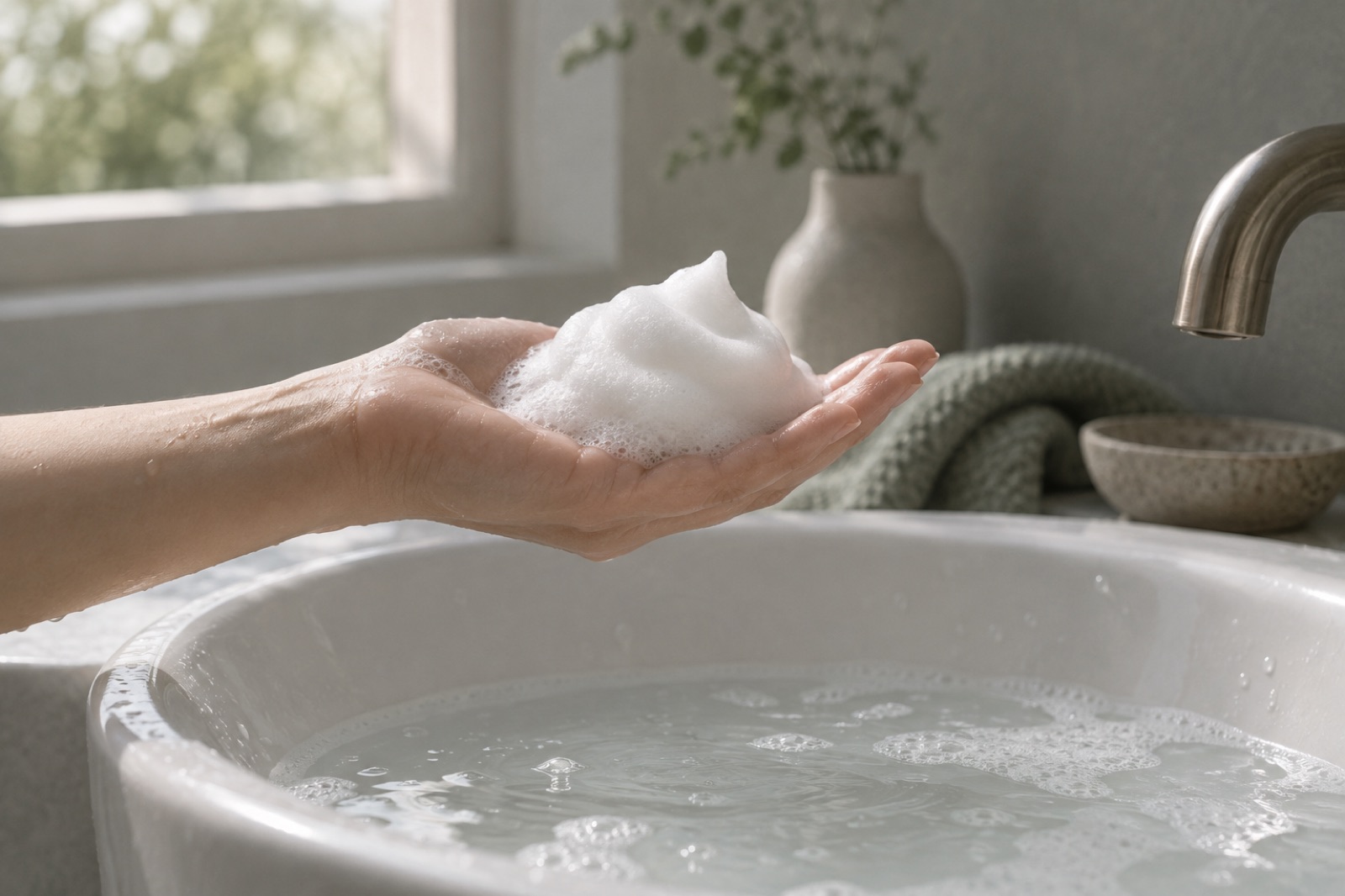
A patch test is not the same as a wash you rinse off, so the numbers don’t carry over directly. Still, if you fix the number of pumps or the squeeze length, in week two you can tell whether the amount or the product is behind a change. For rinsing, count how many times you splash lukewarm water. If rushed mornings before school or work cut your rinses short, mark that day in the tightness column.
How can you tell if your cleanser is acidic or alkaline?
Check the bottle or product description for a pH label first, and ask the manufacturer if there is none. If you can’t find out, write “not listed” in your log and judge by how your skin reacts after washing.
Solid bar-type cleansers, like soap, may lean alkaline, so note them separately. A 2021 review of 11 papers on skin care in older adults recorded that commercial cleansers generally have a pH of about 9.0 and suggested a cleansing pH of 4.0 to 6.8. In Korea, the Ministry of Food and Drug Safety (MFDS) advises checking the package for the words “functional cosmetic” to know whether a product is registered as an acne functional cosmetic, and it explains that even these products are not a medical treatment. The US has no “functional cosmetic” category, so that label won’t appear on US packaging.
What is the difference between a mildly alkaline and a low pH cleanser?
The clearest difference is how much the skin surface pH rises right after washing. In a 1997 trial that split 40 infants into 4 groups of 10 each, skin pH rose by 0.45 in the pH 9.5 alkaline soap group and by 0.19 in the tap-water-only group. A pH 5.5 cleanser raised it only 0.09 more than tap water.
A 2013 study of 43 adults in an intensive care unit also found lower arm skin pH in the group washed with a pH 5.5 cleanser (24 patients) than in the group washed with soap (19 patients) (p=0.0068, non-randomized). But neither study looked at adult faces with acne, and whether a difference in skin pH leads to a difference in breakout counts has not been confirmed. So record the label for reference and make the call with your 2-week log.
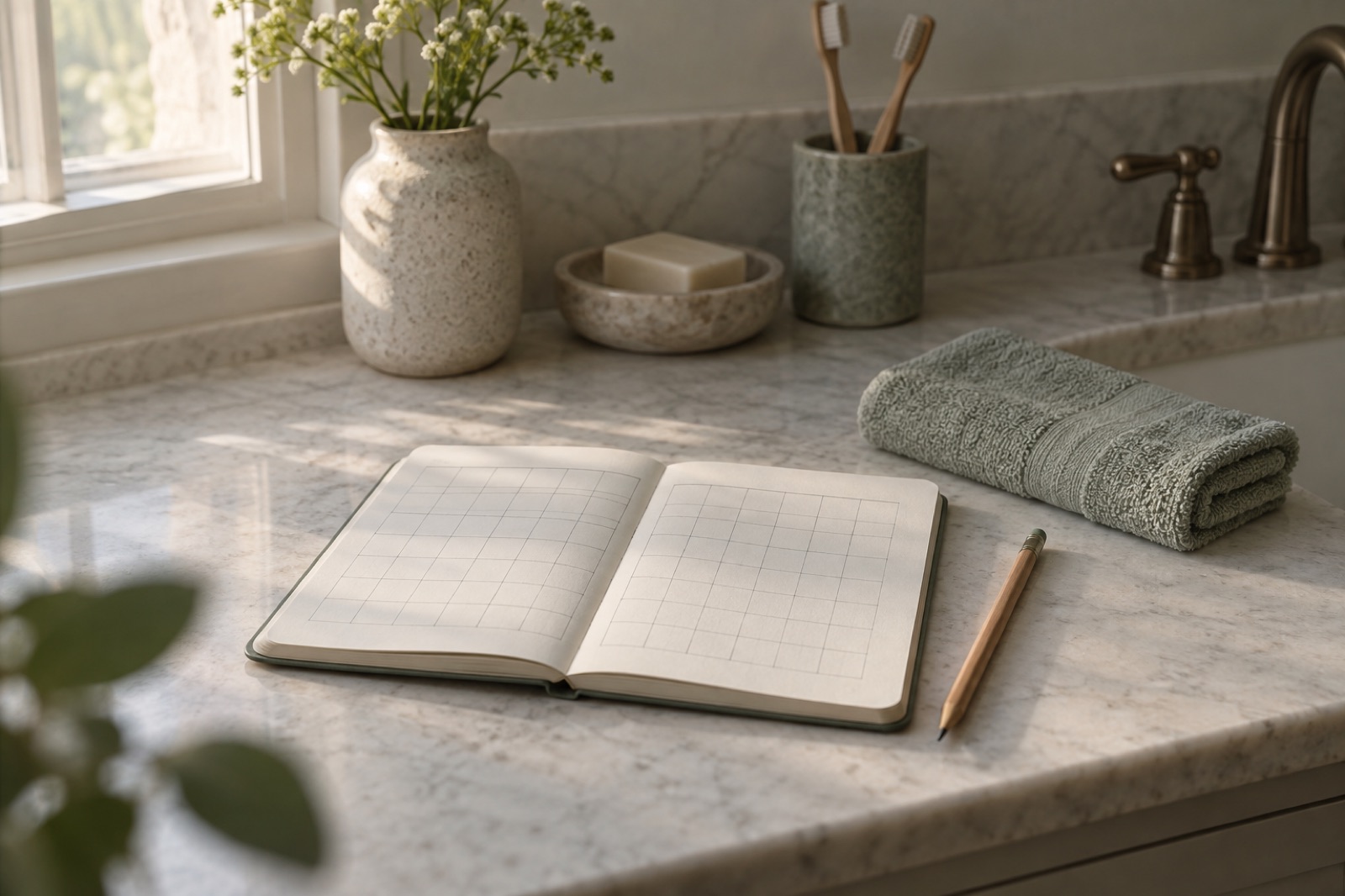
2-week adjustment log
| Period | Lather amount | Rinses | Minutes of tightness after washing | Stinging (none / a little / a lot) | New bumps (forehead, cheeks, chin) | Anything else changed that period |
|---|---|---|---|---|---|---|
| Days 1–3 | ___ pumps | ___ times | ___ min | |||
| Days 4–7 | ||||||
| Days 8–10 | ||||||
| Days 11–14 | ||||||
| Day 14 decision | Try using less? | Try more rinses? | Shorter than in week one? | Still there in week two? | More than in week one? | Did causes overlap? |
If tightness got shorter in week two and new bumps did not increase, the cleanser is worth continuing. If stinging is still “a lot” in week two or new bumps went up, go back to your previous cleanser and fill in the same table for one more week to compare.
When should you ask a doctor about a cleanser reaction?
- If swelling, oozing or a burning feeling shows up after using the new foam, stop using it right away and see a dermatologist.
- If red bumps keep increasing even after you go back to your old cleanser, something other than the cleanser may be involved, so have a dermatologist check.
- If you are using a prescription topical medicine, talk to the prescriber before switching cleansers.
Evidence summary for this guide
- In a 2013 randomized trial that compared 40 women with sensitive skin over 3 weeks (PMID 24305430), irritation reports in the commercial cleanser group were 20% in week 1 and 10% in week 3.
- In a 2022 analysis of 24,097 patch-tested patients (PMID 35551968), the positive rate for glucoside surfactants was 2.0%.
- In a 1997 trial of 40 infants (PMID 9407174), a pH 9.5 alkaline soap raised skin pH by 0.45, more than tap water did (0.19).
Frequently asked questions
Why am I breaking out more after switching to a low pH cleanser?
The evidence behind this guide has no study showing that a low pH label alone adds or reduces tiny bumps. Two low pH cleansers can differ in cleansing agents, fragrance and how much you use, and a new sunscreen or your menstrual cycle may overlap with the switch. Keep every other product the same for 2 weeks and count new bumps, and it becomes easier to tell whether the cleanser is the cause.
How can I tell if my cleanser is acidic or alkaline?
Look for a pH label on the bottle or in the product description first, and ask the manufacturer if there is none. If you still can't find it, write "not listed" in your log and judge by tightness and stinging after washing. A 2021 review of 11 papers on skin care in older adults noted that commercial cleansers generally have a pH of about 9.0.
What is the difference between a mildly alkaline and a low pH cleanser?
The difference shows up in how much the skin surface pH rises right after washing. In a 1997 trial in 40 infants, a pH 9.5 alkaline soap raised skin pH by 0.45, more than tap water did (0.19), while a pH 5.5 cleanser raised it only 0.09 more than tap water. Whether this difference carries over to the number of breakouts on adult faces has not been confirmed.
Sources
- HMP foam cleanser vs. a commercial cleanser in 40 women with sensitive skin, 3-week RCT, 2013 (PMID 24305430)A
- Tolerability of fragranced vs. fragrance-free facial cleansers in sensitive skin, 153 people, 2015 (PMID 26682289)A
- Patch testing to glucoside surfactants, North American Contact Dermatitis Group, 24,097 patients, 2022 (PMID 35551968)B
- Dose-dependent irritation of a surfactant mixture on patch testing, 13 people, 1999 (PMID 18503452)B
- Effects of soap and cleansers on infant skin pH and surface lipids, 40 infants, 1997 (PMID 9407174)B
- Skin pH after a mildly acidic cleanser vs. soap, 43 ICU adults, 2013 (PMID 23665029)B
- Systematic review of skin care for incontinence-associated skin damage in older adults, 2021 (PMID 34729012)A
- Korea's Ministry of Food and Drug Safety (MFDS, Busan office) consumer newsletter — Are acne cosmetics a treatment? (Korean, 2025-05-30)Institutional
- Korean Dermatological Association — Basic skin care products (Korean)Institutional
Videos and forum posts never count as evidence for a fact here. Full rules: Editorial policy