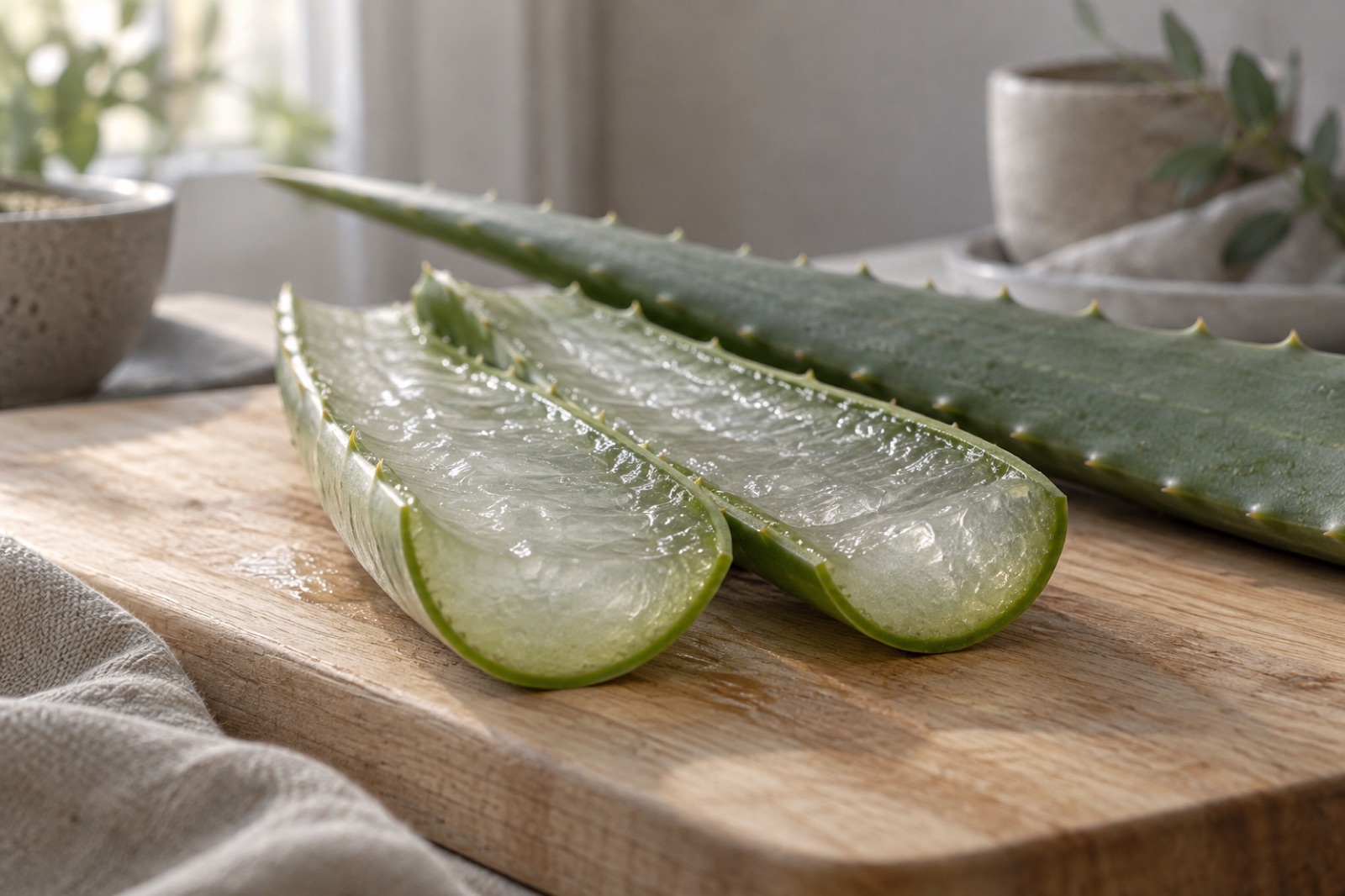
Aloe Vera Gel First Use: A 3-Step Patch Test and Summer Storage
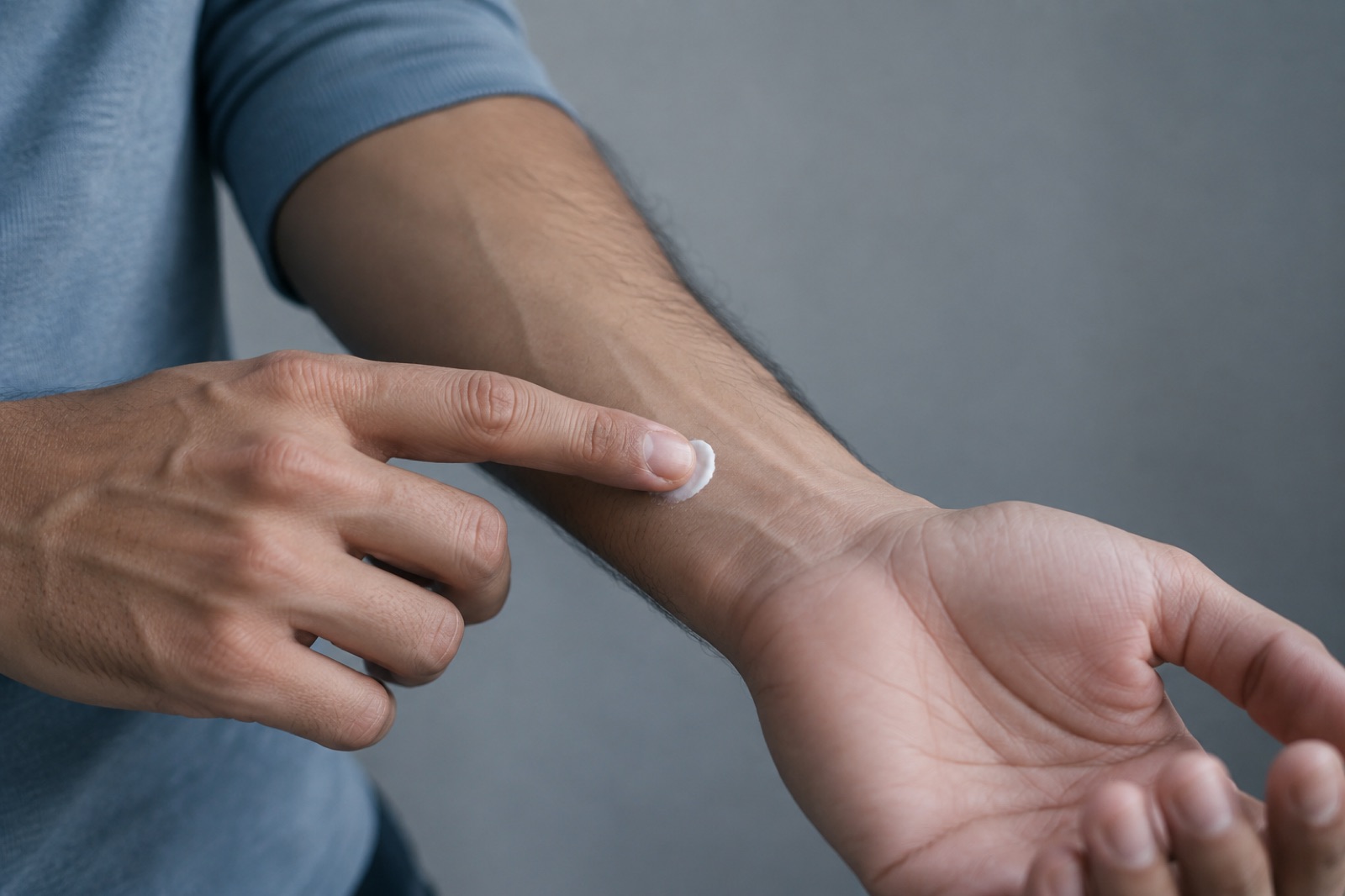
Before using a new aloe vera gel every day, apply it for at least two days each on your inner arm, then one side of your jawline, then your whole face, and write down how your skin reacts.
What this note covers9 sections
- Where and how much should you apply the first time?
- Can you use an aloe mask when your skin has broken out?
- If you have oily skin, can aloe gel be your last step?
- Can you mix aloe soothing gel and centella extract?
- How should you use it after a lot of sun?
- How do you scoop and store an opened soothing gel?
- Aloe soothing gel 3-step test log
- When should you see a dermatologist about it?
- Evidence behind this guide
| Item | Detail | Basis |
|---|---|---|
| Testing order | Inner arm → one side of the jawline → whole face, waiting at least two days at each stage before moving on | Korean Dermatological Association (patch left on 48 hours, read again two days later) · institution |
| Days to skip | Don’t apply it to scratched or squeezed spots or peeling skin | MFDS 2025 · institution |
| Wounds | In 21 people with surgical wounds, closure took 83±28 days in the group that added aloe vera gel and 53±24 days in the group that didn’t | 1991 PMID 2047051 · A |
| Time frame used in studies | A half-face trial had people apply aloe vera gel (87.4%) twice a day for 18 weeks, with checks every few weeks | 2026 PMID 42087432 · A |
| Storage | Check the directions, cautions and expiration date on the container and packaging first | MFDS 2025 · institution |
Where and how much should you apply the first time?
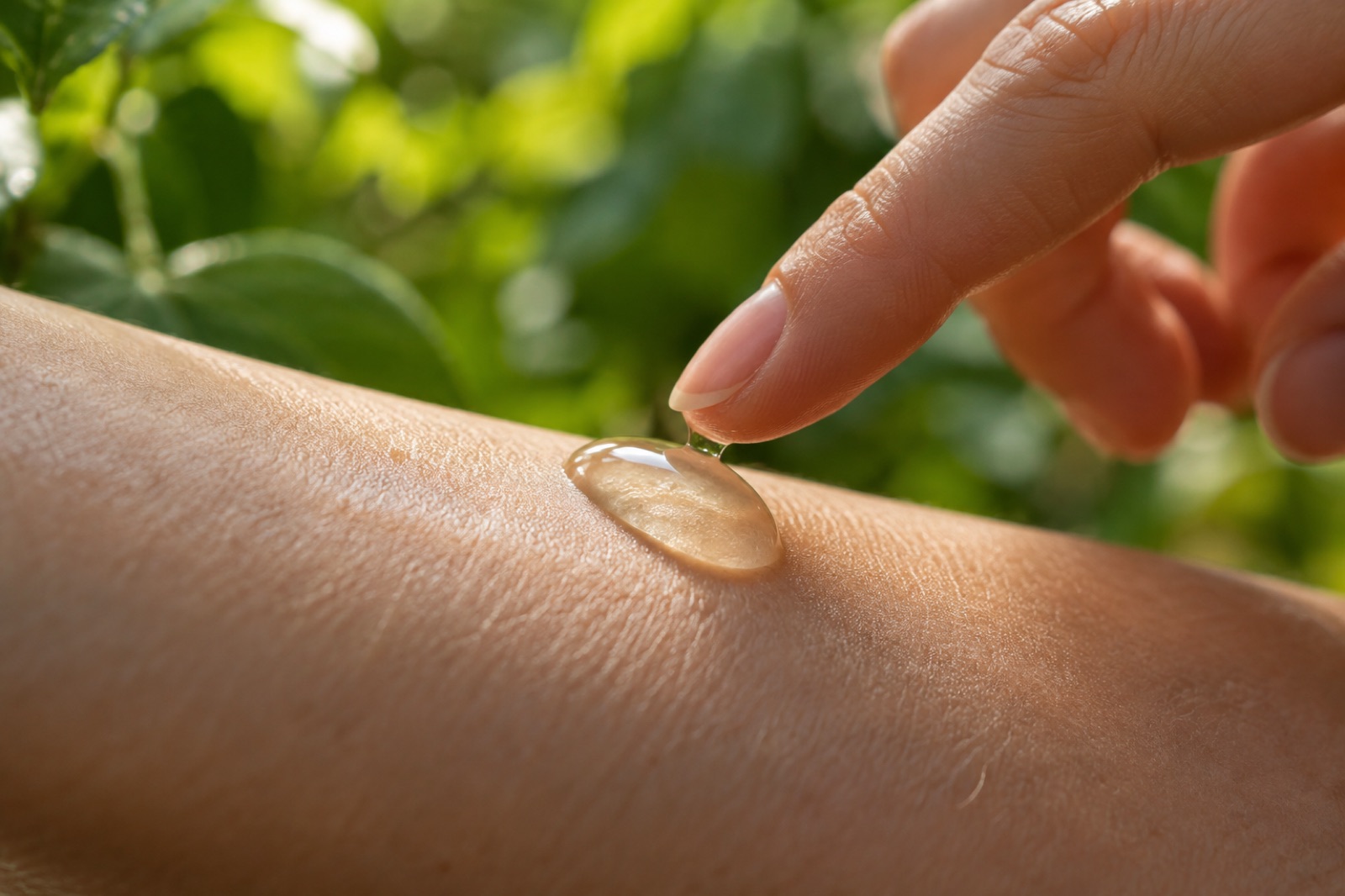
For the first three days, put a coin-size amount on your inner arm, not your face. If it’s fine, move to one side of your jawline, then to your whole face. The reason for waiting at least two days per stage is that when dermatologists check reactions to cosmetic ingredients, they leave the patch on for 48 hours, remove it, and read it again two days later.
The Korean Dermatological Association explains that an allergy to a cosmetic ingredient only happens in people who have become sensitized to that ingredient. So even a gel that suited your friend well needs to be checked on your own skin. For the jawline stage, pick the side that mask straps or hair don’t touch, so other irritation doesn’t get mixed in.
Can you use an aloe mask when your skin has broken out?
If you have scratched, squeezed or oozing spots, put off the mask until they settle. In a 2025 consumer notice, Korea’s Ministry of Food and Drug Safety (MFDS) wrote that cosmetics shouldn’t be used on damaged skin and that you should see a specialist if red spots or swelling appear.
The link between wounds and aloe is also less simple than people think. In a 1991 randomized trial comparing 21 women with wounds after a C-section or gynecologic surgery, the group that added aloe vera gel to standard care took an average of 83 days for the wounds to close, while the group without it took 53 days (P=.003). Surgical wounds aren’t the same as facial breakouts, but it’s a reason to rethink the habit of piling gel thickly onto squeezed spots.
If you have oily skin, can aloe gel be your last step?
Even with oily skin, decide whether to stop at gel by whether your cheeks feel tight about two hours after applying. The Korean Dermatological Association describes cream as the step that temporarily adds a protective layer to keep skin moist and shield it from outside irritation, so add a light moisturizer only on days the tightness lingers.
If shine bothers you first, like a student with summer gym class or an office worker with long afternoon meetings, you can split by time of day: gel only in the morning, and a layer of moisturizer over the gel at night. Logging tightness and shine at 3 p.m. for a week will show which works for you.
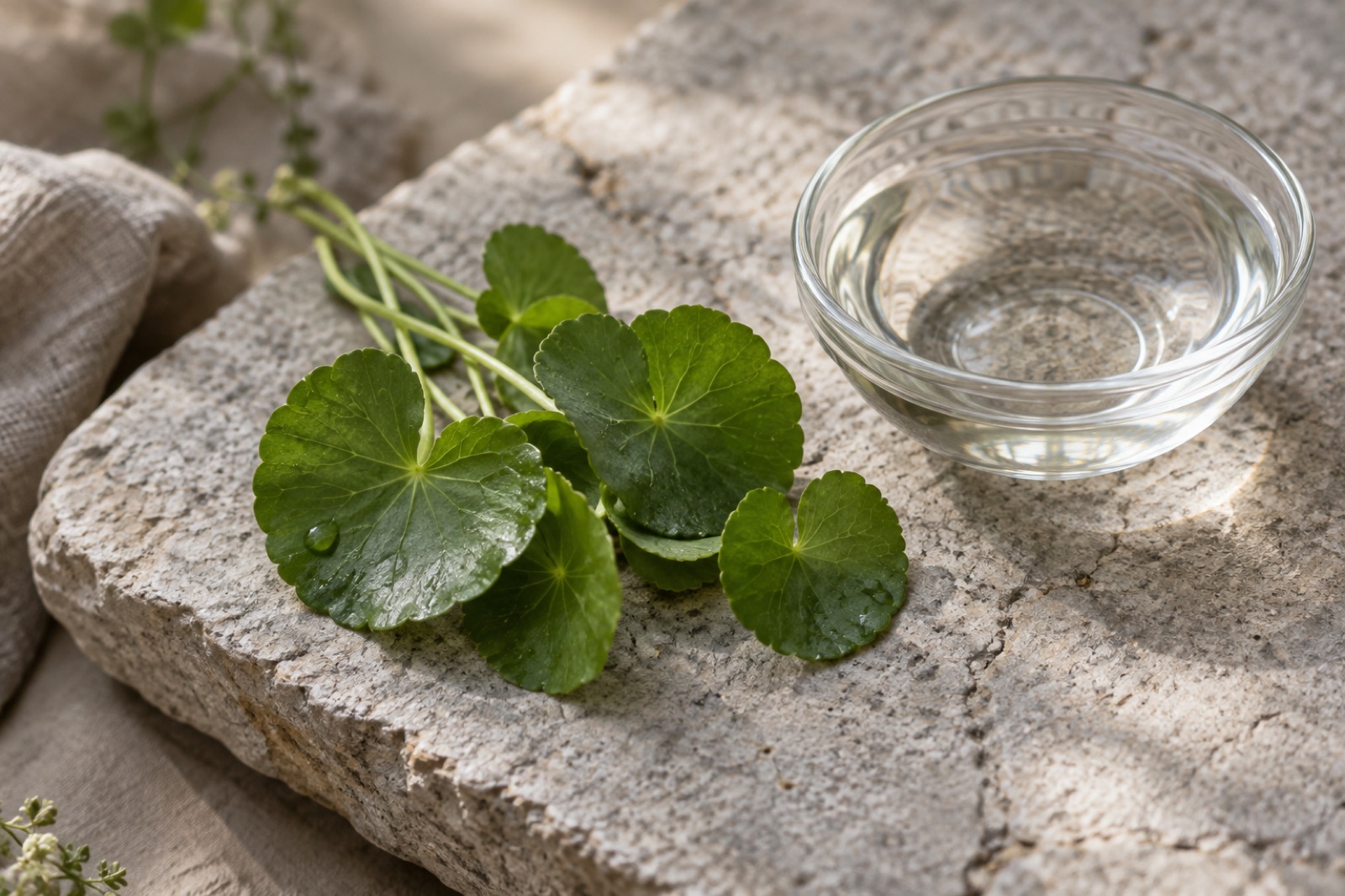
Can you mix aloe soothing gel and centella extract?
We couldn’t find any study of mixing two products in your palm. Studies of combined formulas containing aloe all used finished products with ratios set during manufacturing.
In a 2019 trial in which 60 people aged 20 to 45 in Thailand applied it twice a day for 28 days, the hydrogel combined aloe leaf powder, mangosteen peel extract and green tea leaf extract at 50:25:1, and there was no severe dryness or burning. In a 2026 trial where 60 people used a moisturizer containing both oat and aloe for 12 weeks, no tolerability problems were reported either, but you can’t tell which ingredient deserves the credit. At home, test each product through the 3 steps separately, then apply them one after the other, thinnest first, instead of mixing; that keeps your log easy to read.
How should you use it after a lot of sun?
On a day your face feels hot from long sun exposure, don’t make it the day you first test a new gel. Only use a gel that has already passed all 3 stages, in a thin layer, and rinse it off right away if it stings.
After swimming or an outdoor event, a red face easily brings aloe to mind, but the 2026 half-face trial on aloe vera gel (29 people analyzed) wasn’t about sun-heated skin either; it had people apply the gel twice a day for 18 weeks, with checks every few weeks. It didn’t look at changes over a day or two, so on hot-feeling days, lean toward not adding more irritation. If blisters form or pain is strong, don’t layer on more gel; get medical care.
How do you scoop and store an opened soothing gel?
With a large tub, take out only what you need with a clean spatula and don’t dip your fingers in. MFDS advises checking the directions, cautions and expiration date printed on the container and packaging carefully, so whether to refrigerate it also follows the product label.
Avoid places where the temperature swings a lot, like a car or a windowsill in summer. Writing the opening date inside the lid makes it easy to match against reaction dates in your log.
Aloe soothing gel 3-step test log
| Stage | Where and how much | How long | What to note that day | When to move on |
|---|---|---|---|---|
| Stage 1 | Inner arm, coin-size | 2–3 days | Any itching, redness or bumpy texture | No change for three days |
| Stage 2 | One side of jawline (side mask straps don’t touch) | 2–3 days | Number of new bumps; compare applied side with the other side | No left-right difference |
| Stage 3 | Whole face, one thin layer | 1–2 weeks | Tightness and shine at 3 p.m.; mark days around your period, late work nights, sunny days | Not worse than before you started |
| Daily use | Start with once, morning or night | 4 weeks | Photos of redness (same light, same time) | After 4 weeks, decide whether to keep going |
| Stop | — | — | Date stopped, date it settled | Don’t restart even after it settles |
A one-line note on your phone is enough. The log only means something if you don’t bring in other new products during the same period.
When should you see a dermatologist about it?
- If the area where you applied it swells, itches, oozes or blisters, stop using it and see a dermatologist.
- If redness and stinging stay the same 1 to 2 weeks after you stop the gel, ask a dermatologist about finding the ingredient responsible (patch testing).
- If you get blisters after sun exposure or strong pain and heat, get medical care first rather than layering on gel.
- If squeezed spots haven’t closed after several weeks, or deep bumps that hurt when pressed keep increasing, consider seeing a doctor.
Evidence behind this guide
- In a 1991 randomized trial comparing 21 women with surgical wounds (PMID 2047051), the group that added aloe vera gel took an average of 83 days for wounds to close, versus 53 days for the group that didn’t.
- The 2026 half-face trial that analyzed 29 people (PMID 42087432) had people apply aloe vera gel (87.4%) twice a day for 18 weeks, using a single brand-name product.
- In a 2019 trial in which 60 people in Thailand used it for 28 days (PMID 31239743), the aloe combination hydrogel was a finished product with three raw materials set at 50:25:1, and no severe dryness or burning was reported.
Frequently asked questions
Do I need moisturizer after aloe vera gel, and can oily skin use aloe?
Oily skin can use aloe gel too, and whether gel alone is enough depends on tightness about two hours later. The Korean Dermatological Association describes cream as the step that temporarily adds a protective layer to keep skin moist. If your cheeks feel tight in the afternoon, add a thin layer of light moisturizer; if all that's left is shine, finishing with gel is usually fine.
Can I put aloe vera gel on my face when my skin is broken out?
If there's oozing, or scratched or peeling spots, hold off on an aloe mask. Korea's Ministry of Food and Drug Safety (MFDS) advises that even cosmetics made for acne-prone skin shouldn't be used on damaged skin and that you should see a specialist if red spots or swelling appear. In a 1991 trial of 21 women with surgical wounds, wounds took an average of 83 days to close in the group that added aloe vera gel versus 53 days in the group without it.
Can you mix aloe vera gel with centella extract?
No study has looked at mixing two products in your palm. Studies of combined formulas containing aloe were finished products with ratios set during manufacturing. If you test each separately and both are fine, applying them one after another, thinnest first, rather than mixing, makes it easier to tell which product caused a reaction.
Sources
- Korea's Ministry of Food and Drug Safety (Busan office) consumer newsletter — Are acne cosmetics a treatment?, 2025-05-30 (Korean)Institutional
- Korean Dermatological Association — Contact dermatitis (Korean)Institutional
- Korean Dermatological Association — Basic skincare products (Korean)Institutional
- Aloe, mangosteen and green tea combined hydrogel: randomized comparison, 2019 (PMID 31239743)A
- Dual-wavelength laser vs. aloe vera gel for post-acne redness: half-face comparison, 2026 (PMID 42087432)A
- Oat and aloe moisturizer vs. metronidazole cream: randomized trial, 2026 (PMID 42163060)A
- Aloe vera gel and closure time of surgical wounds, 1991 (PMID 2047051)A
Videos and forum posts never count as evidence for a fact here. Full rules: Editorial policy
What to check when choosing a product for this routine
Check the criteria below before the product name. Each item can be found on the full ingredient list or in the product description.
| Item | What to look for | Why |
|---|---|---|
| Where ethanol and fragrance sit | Check whether they appear near the top of the ingredient list (higher amounts) | If stinging shows up during your trial, it's a clue that helps narrow down the suspects |
| Area of use | Check whether the directions say it's for the whole face or for small spots | Lets you match how much area you cover at each stage of the 3-step test |
| Testing information | Whether the brand says how irritation was tested | Results still vary by person, but it gives you one reference point before the inner-arm test |
| Container type | Whether it's a pump or tube, so your fingers don't touch the contents | Easy dispensing keeps care after opening simple |
Product from this site's operator · KW Cosmetic Content Team
Centella Rescue Spot AmpouleCosmetics do not replace the diagnosis or treatment of a skin condition.