Folliculitis vs Acne: A Few-Day Log Before Any Ointment Hunt
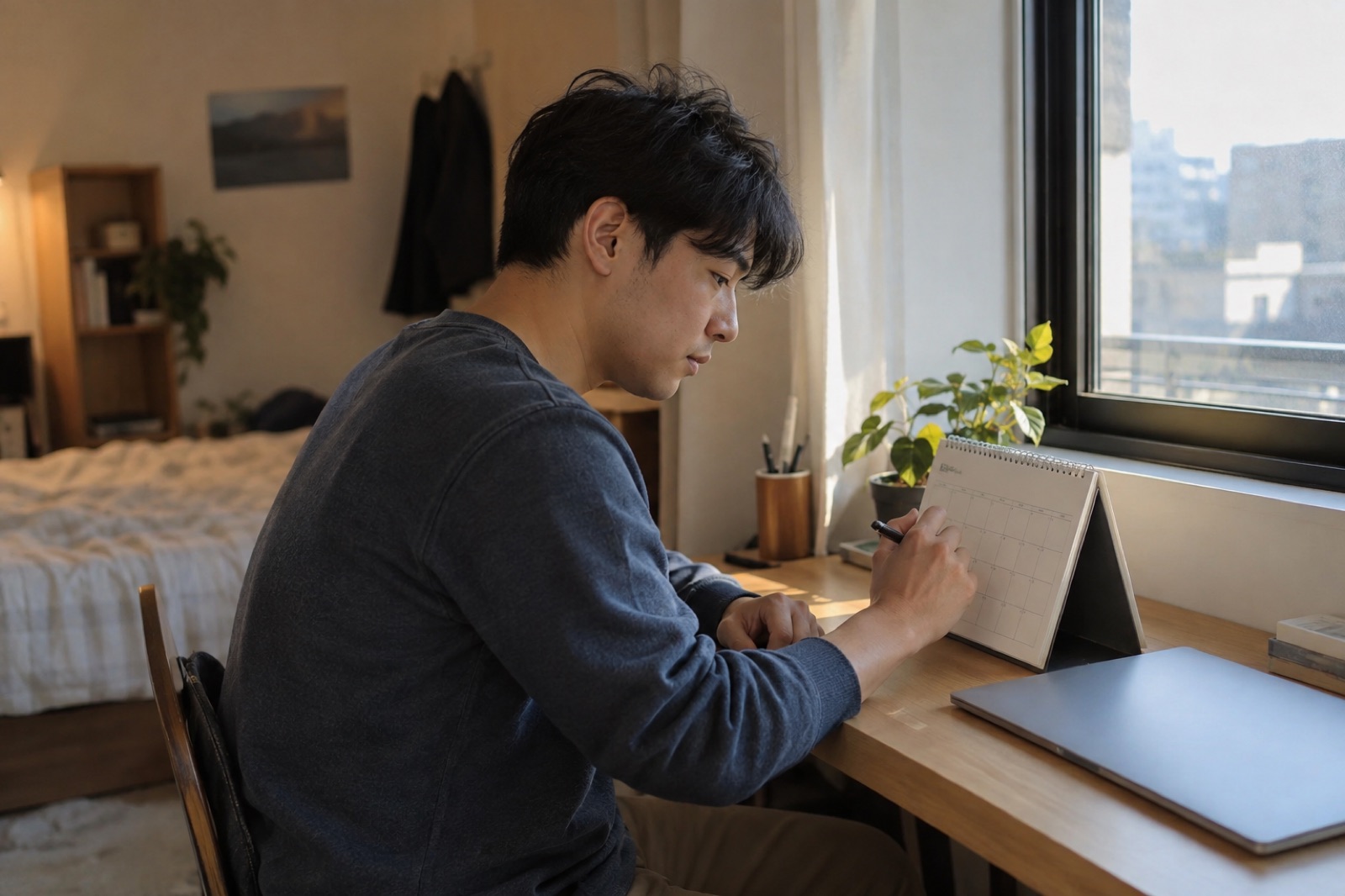
Folliculitis and acne are hard to tell apart by looks alone, so keep a few days of notes on the bumps and what you did, then have a dermatologist check them with your log in hand.

What this note covers6 sections
| Item | Detail | Basis |
|---|---|---|
| Where it tends to show up | Described as common on the arms and legs, the scalp and around the mouth | Korean Dermatological Association, folliculitis · society |
| Clues that point to acne | Acne appears as a mix of comedones, red bumps, pus bumps and nodules, and diagnosis needs to rule out folliculitis | Korean Dermatological Association, acne vulgaris · society |
| Types by body area | Types differ by location, such as the keloidal kind on the back of the neck; the trial on that type had 13 people | 2018 PMID 29587518 · A |
| How long to observe | Three to five days from the day it first appeared, once a day at the same time | Our editorial rule |
The Korean Dermatological Association is Korea’s professional society of dermatologists; its public disease pages are the main reference here.
Why do you get folliculitis?
The Korean Dermatological Association describes folliculitis as a bacterial infection that forms pus-filled bumps in hair follicles. Types with a different cause, like the yeast (Malassezia) type studied in a 2024 randomized trial of 50 adults (PMID 38979986), get their own plan at the clinic.
You thought it was acne: how does folliculitis look different?
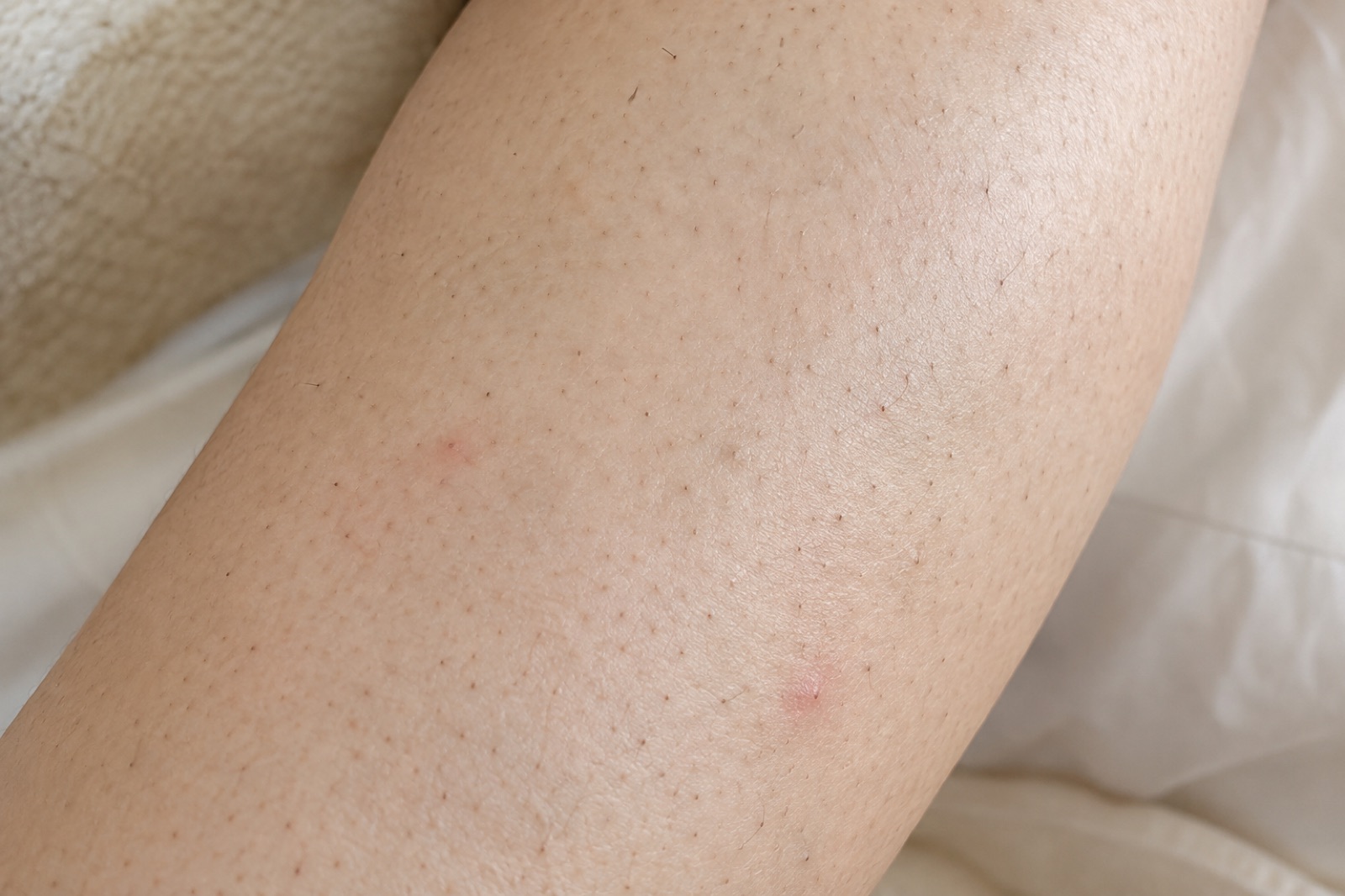
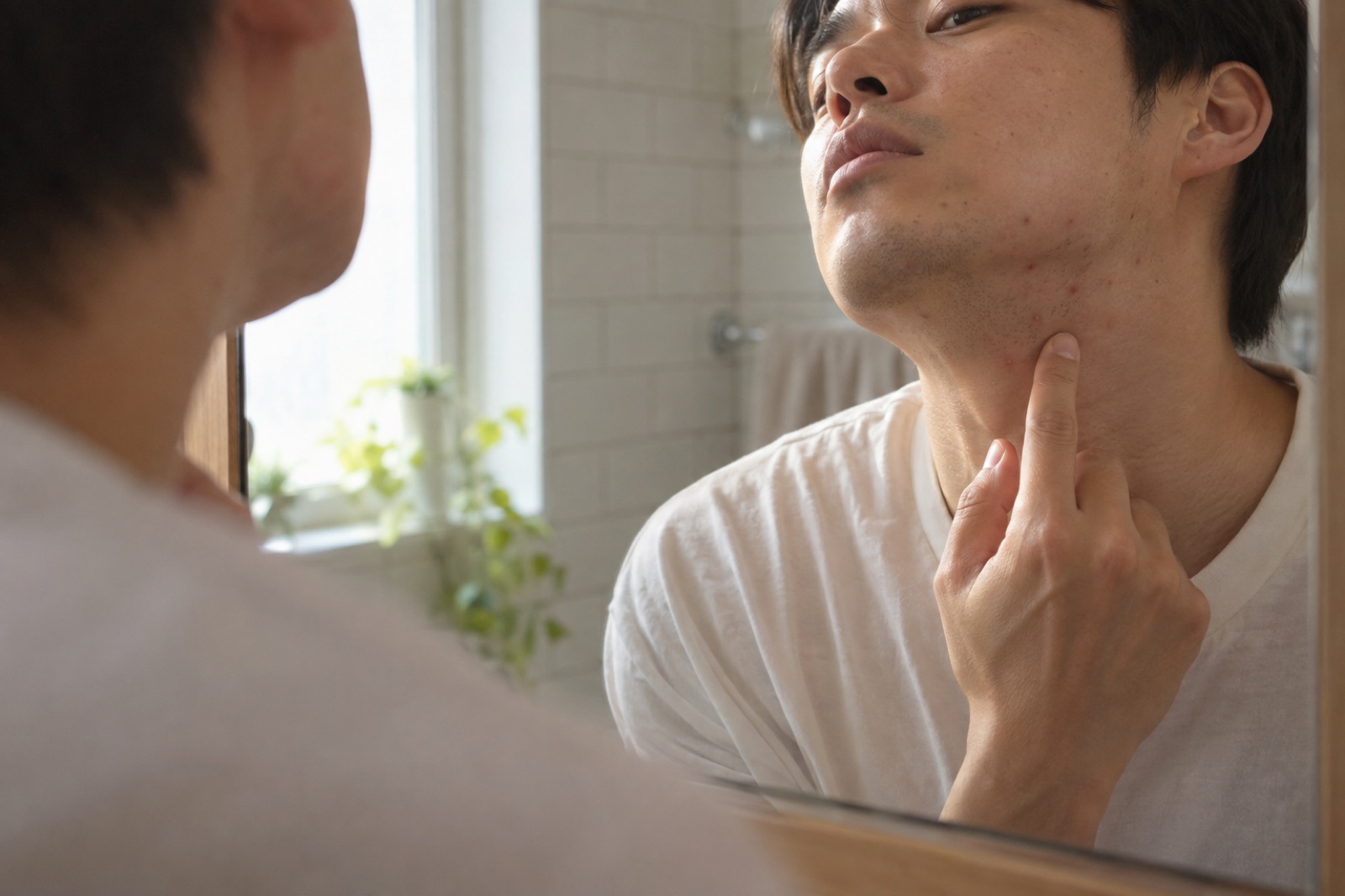
Acne mixes comedones, which look like tiny bumps, with red bumps, pus and deeper lumps; folliculitis comes up as a cluster of yellow or white pus bumps that break easily. If there was a clear trigger, like your jawline the day after shaving or your back after gym class, circle that day in the log.
Can you tell pustular acne from folliculitis at home?
What you can do at home is record, not sort. There is research on in-clinic imaging tools that can look as far as follicle mite counts and inflammation, but a 2023 systematic review (PMID 37140216) rated 36 of 39 studies as high or unclear risk of bias.
So during the days you observe, do not change your cleanser or cosmetics; write down what you already use and how often you wash. With nothing changed, it is easier to narrow down the cause in the exam room.
Few-day observation log
| Date | Look (pus size, comedones yes/no) | Itch or pain | Where it spread | What you did that day |
|---|---|---|---|---|
| Day 1 (example) | 6 white pus bumps, no comedones | Itchy | Left side of chin | Shaved in the morning, gym in the evening |
| Day 2 | ||||
| Day 3 | ||||
| Days 4–5 |
While you log, do not squeeze or pick at the pus bumps. Korea’s disease-control agency (KDCA) notes that scratching or squeezing on your own makes scars more likely. Also skip borrowing a family member’s ointment without knowing what it is, or scrubbing the area, and if you have already applied something, write it under the table.
When should a dermatologist take a look?
- If the pus bumps spread widely within a few days, or come with fever or severe pain, see a dermatologist right away.
- If they come back in the same spot even after a break from shaving or workouts, take your log to a dermatologist.
- If itching stands out and the bumps spread to your chest, back or forehead, ask a dermatologist to check for a yeast-related cause too.
- If something you applied made it spread, bring what you used and talk it over with a dermatologist.
Evidence at a glance
- A 2023 systematic review (PMID 37140216) that pooled 39 studies examining follicle conditions with imaging tools rated 36 as high or unclear risk of bias.
- A 2024 randomized trial in 50 adults with yeast-type (Malassezia) folliculitis (PMID 38979986) compared two in-office approaches over two weeks and found no significant difference in success rates.
- The Korean Dermatological Association says folliculitis commonly appears on the arms and legs, the scalp and around the mouth.
Frequently asked questions
Why do I get folliculitis?
The Korean Dermatological Association describes folliculitis as a bacterial infection that forms pus-filled bumps in the openings where hairs grow (hair follicles). Some types have a different cause, such as a yeast called Malassezia, so a clinic visit is where the cause gets confirmed. Notes on shaving, waxing, workouts and sweating in the days before a flare help narrow it down.
I thought it was acne but it might be folliculitis. What is the difference?
According to the Korean Dermatological Association, acne shows up as a mix of comedones (tiny bumps and blackheads), red bumps, pus bumps and deeper lumps, while folliculitis shows up as a cluster of yellow or white pus bumps that break easily. If only pus bumps appeared at once with no comedones, mark that in your log and have a dermatologist check it.
Can I tell pustular acne from folliculitis on my own?
It is hard to confirm by eye at home. A 2023 systematic review of 39 studies that examined follicle conditions with imaging tools such as confocal microscopy and OCT rated 36 of them as high or unclear risk of bias, and concluded that even device-based methods need more research. At home, note for a few days whether comedones are mixed in and whether the bumps follow hair-bearing areas, and leave the call to a dermatologist.
Sources
- Korean Dermatological Association — Folliculitis (Korean)Institutional
- Korean Dermatological Association — Acne vulgaris (Korean)Institutional
- Korea Disease Control and Prevention Agency (KDCA) National Health Information Portal — Acne (Korean)Institutional
- Systematic review of 39 confocal microscopy and OCT imaging studies of follicle conditions, 2023 (PMID 37140216)A
- Randomized trial in 50 adults with Malassezia folliculitis, 2024 (PMID 38979986)A
- Controlled trial in 13 people with keloidal folliculitis on the back of the neck, 2018 (PMID 29587518)A
Videos and forum posts never count as evidence for a fact here. Full rules: Editorial policy