Whiteheads and Blackheads: A Week-by-Week Plan Without Squeezing
Don't squeeze whiteheads and blackheads. Wash gently every day, exfoliate only once or twice a week, keep it up for 4 weeks, then compare photos.
What this note covers7 sections
| How often | What to stick to | Basis |
|---|---|---|
| Daily | Twice a day is enough; washing more often can make things worse | KDCA Acne (updated 2026) · agency |
| Once or twice a week | Overusing exfoliating products can cause physical irritation and make things worse, so cap how often | Korean Dermatological Association, acne vulgaris · society |
| What not to do | Extracting blackheads (open comedones) doesn’t change the course and is done only for cosmetic reasons | Korean Dermatological Association, acne vulgaris · society |
| The stage you can’t see | Even normal-looking forehead skin showed thickened follicles and built-up dead skin (15 people) | 2018 PMID 29369333 · B |
| 4 weeks | A study measured microcomedone changes over a 1-month span | 1998 PMID 9692305 · A |
How many times a day should you wash, and how?
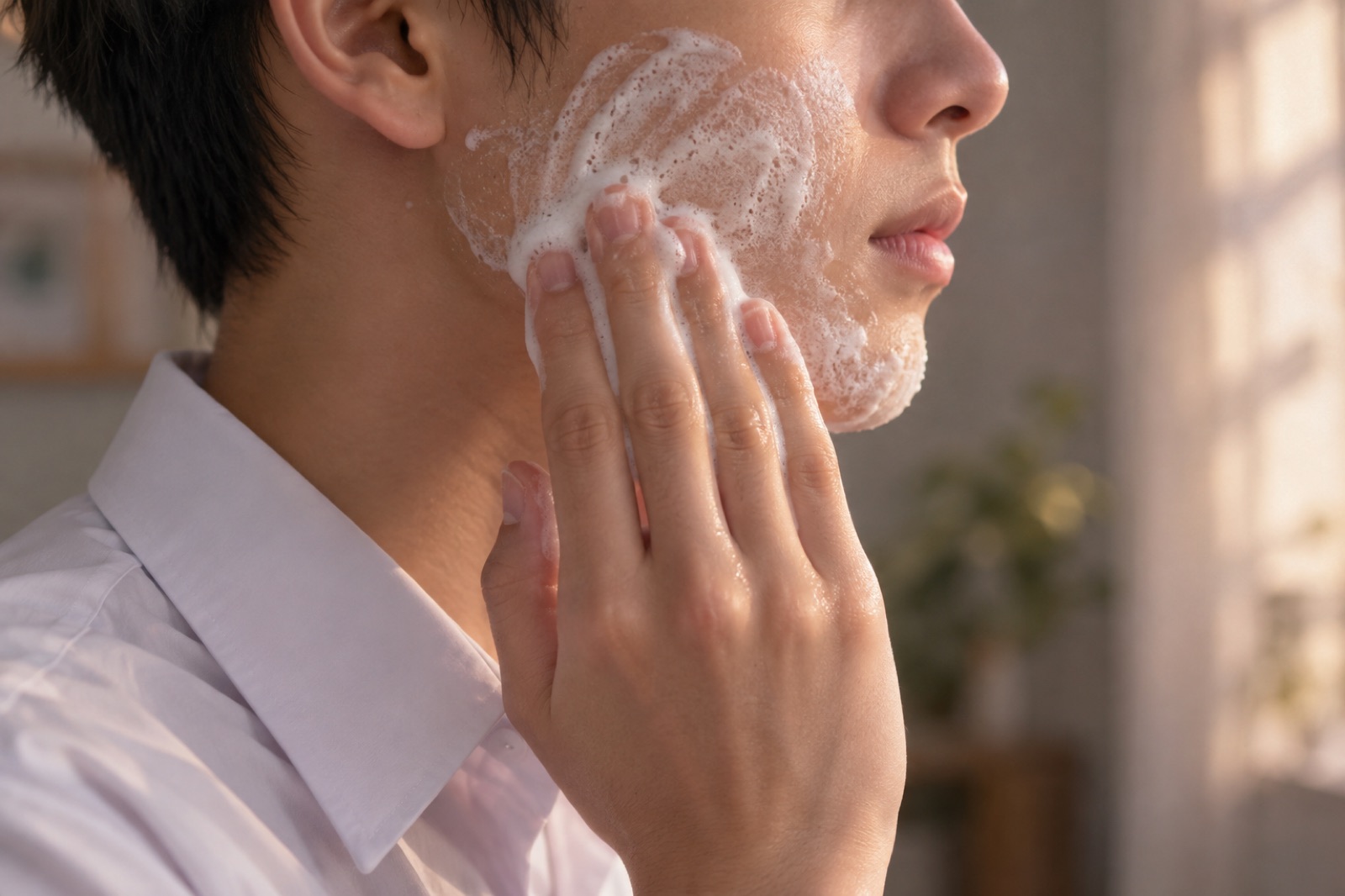
Morning and evening is enough. What matters more than the number is whether the lather reached the creases beside your nose and under your chin, and whether you rinsed it off well. Guidance from the Korea Disease Control and Prevention Agency (KDCA) says frequent washing can backfire, and twice a day is plenty.
Your palms don’t reach the creases beside your nose easily, so push lather in with your fingertips. If you want to rinse off sweat at lunch on a gym class day, use water only, no cleanser, and do your evening wash as usual. If you’re someone who wears sunscreen to work every day, lock in a double cleanse in the evening, with a first step that takes off sunscreen. The KDCA material also says double cleansing helps on days you wear sunscreen or makeup.
Why limit exfoliating to once or twice a week?
Exfoliating isn’t a case of more is better; it’s a step where irritation adds up, so this guide caps it at once or twice a week. The Korean Dermatological Association warns that overusing exfoliating products puts physical irritation on the skin and can make things worse.
Setting the days ahead of time keeps you from scrubbing every day on a whim. If Tuesday and Friday are your exfoliating days, write down any day that week you felt tightness or stinging, and skip Friday. The KDCA also advises avoiding scrubs because they can weaken the skin barrier, so leave out anything that rubs with grains.
Why shouldn’t you use pore strips or your nails to pull them out?
Pulling out one visible dot doesn’t change how things go, and it easily leaves nail marks and redness. The Korean Dermatological Association explains that extracting blackheads (open comedones) has no effect on the course of acne and is done only for cosmetic reasons.
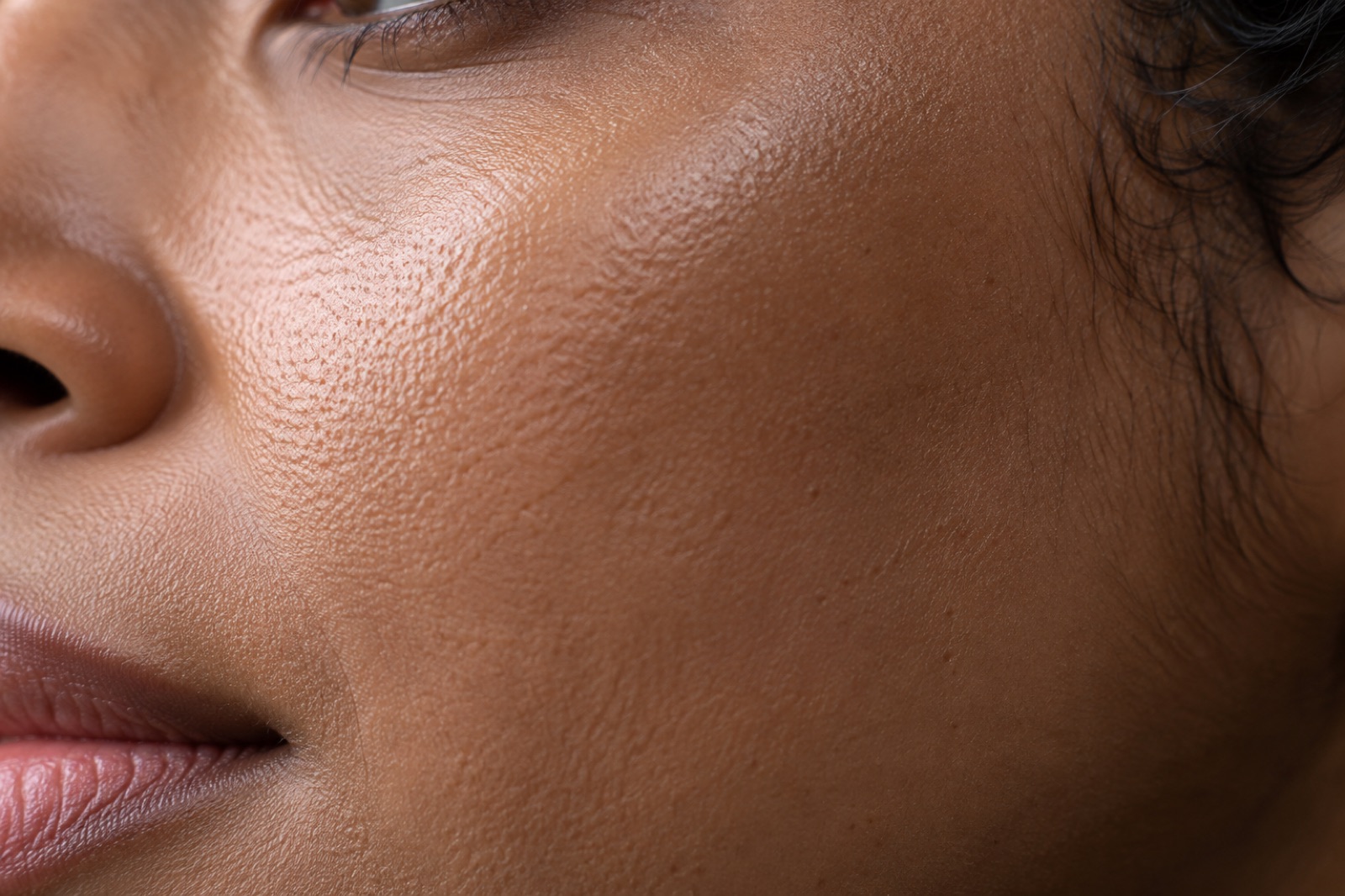
Be even more careful with whiteheads. The same source treats closed comedones as the stage before pus-filled acne, and the KDCA says squeezing them yourself can leave them redder, more swollen and scarred. What you can see isn’t the whole picture, either. In a 2018 study that examined 15 adult women with acne under a confocal microscope, follicles in normal-looking forehead skin had a larger diameter, and of the 791 follicles observed, 68% had a thickened border and 65% had built-up dead skin (hyperkeratinization) along the border, more than in the control group (grade B, small study).
What should you compare after 4 weeks?
Look at your Sunday photo from week 1 and from week 4, and see whether the areas where dark dots and white bumps cluster have spread or stayed the same. One month is this guide’s unit of comparison; comedones take time to show visible change, so don’t judge after 1 or 2 weeks.
Research gives a reason to look in monthly units, too. A 1998 crossover randomized trial in people with mild acne measured microcomedone size 1 month after applying linoleic acid: where it was applied, size decreased by almost 25%, while the sites given placebo showed no change (a raw-ingredient test, unrelated to any finished product). The Korean Dermatological Association explains that lower linoleic acid in sebum is tied to the process that thickens the follicle lining.
Weekly care chart
| Day | Morning | Evening | Extra task |
|---|---|---|---|
| Mon | Lukewarm-water wash | Wash (double cleanse on sunscreen or makeup days) | None |
| Tue | Lukewarm-water wash | Wash | Exfoliation, round 1 |
| Wed | Lukewarm-water wash | Wash | Mark whether you touched your nose or chin |
| Thu | Lukewarm-water wash | Wash | None |
| Fri | Lukewarm-water wash | Wash | Exfoliation, round 2 (skip if you had tightness or stinging) |
| Sat | Lukewarm-water wash | Wash | None |
| Sun | Lukewarm-water wash | Wash | One photo each of nose and chin under the same light |
Once you’ve done 4 weeks, line up the four Sunday photos and also check whether the weeks you touched your face most match the weeks the photos looked worse.
When should you bring a dermatologist in?
- If the white bumps turn red, swollen and painful, or start filling with pus, see a dermatologist.
- The KDCA treats no improvement after 6 to 8 weeks of steady care under a doctor as the point to change approach. If nothing changes after one more month past your 4-week comparison, get a dermatology consultation.
- If itchy red bumps spread where you used sunscreen or a new product, have it checked to see if it’s a different skin reaction.
- If spots you squeezed or picked are starting to leave marks or dents, talk to a specialist.
The research in short
- In a 1998 crossover randomized trial in mild acne, microcomedone size decreased by almost 25% over 1 month at the sites where linoleic acid was applied, with no change at the sites given placebo (raw-ingredient test, unrelated to any finished product).
- In a 2018 confocal microscopy study of 15 adult women with acne, of the 791 follicles observed in normal-looking forehead skin, 68% had a thickened border and 65% a hyperkeratinized border, more than in controls.
- The Korean Dermatological Association explains that extracting blackheads (open comedones) doesn’t affect the course of acne.
Frequently asked questions
What does a whitehead actually mean?
It's a closed comedone: a pore whose opening is blocked, with dead skin cells and oil trapped inside. The Korean Dermatological Association describes it as a small skin-colored bump with no visible opening and considers it clinically important because it comes before red, pus-filled acne. There's also a stage before you can see anything: a 2018 observational study of 15 adult women with acne found thickened follicles with built-up dead skin even in skin that looked normal.
What face washing routine helps with blackheads?
The sources behind this guide include no evidence that washing alone makes blackheads go away. Korea's KDCA explains that the dark color at the pore opening isn't dirt but hardened oil with shed skin cells stuck to it, and that washing too often can make things worse, so twice a day is enough. Rather than scrubbing hard, stick daily to spreading lather into the creases beside your nose and rinsing well.
Why do tiny whitehead-like bumps show up in the pores beside my nose when I wear sunscreen and makeup?
Sunscreen and makeup may have blocked pore openings and formed small comedones. The KDCA says sunscreen or makeup raises the chance of clogged follicles and acne, so double cleansing helps, and it recommends choosing products labeled oil-free or non-comedogenic. If the bumps itch or spread with redness, it could be a different skin reaction, so get it checked.
Sources
- Topical linoleic acid and microcomedones, crossover RCT with digital image analysis, 1998 (PMID 9692305)A
- Confocal microscopy of follicles in adult female acne, 2018 (PMID 29369333)B
- Korean Dermatological Association — Acne vulgaris (Korean)Institutional
- Korea Disease Control and Prevention Agency (KDCA) National Health Information Portal — Acne (Korean, updated 2026-08-03)Institutional
Videos and forum posts never count as evidence for a fact here. Full rules: Editorial policy
What to check when choosing a product for this routine
Check the criteria below before the product name. Each item can be found on the full ingredient list or in the product description.
| Item | What to look for | Why |
|---|---|---|
| Built-in exfoliating ingredients | Whether exfoliating ingredients such as AHA, BHA or PHA already appear in the full ingredient list | If it overlaps with your separate exfoliating days, the cause of any tightness or redness in your log gets mixed up, so if they're in there, that's your cue to exfoliate less often |
| Fragrance | Whether fragrance appears in the full ingredient list | You use this step twice a day, so it helps to separate out even one variable when you note stinging |
| Cleansing step | Whether the directions say it's a first cleanser that takes off sunscreen and makeup, or a face wash used after that | You need this label to set the order of your double cleanse on days you wear sunscreen |
| Irritation testing disclosed | Whether the brand says how irritation was tested | Reactions differ from person to person, but you can choose knowing under what conditions it was checked |
Product from this site's operator · KW Cosmetic Content Team
Revive Therapy A.C CleanserCosmetics do not replace the diagnosis or treatment of a skin condition.