Azelaic Acid, the First 4 Weeks: A Sting Log and Split Schedule
In Korea, azelaic acid is an ingredient banned from cosmetics, so for the first 4 weeks you use it as prescribed and log how much it stings and which other products you used alongside it.
What this note covers8 sections
- Why is azelaic acid banned in Korea?
- What is azelaic acid made of?
- What does azelaic acid 20% mean?
- How do you keep a sting diary in your first 4 prescribed weeks?
- How do you split days with salicylic acid or retinol products?
- First 4-week sting diary
- When should you call the clinic or see a dermatologist?
- Evidence behind this guide
| Item | Detail | Basis |
|---|---|---|
| Status in Korea | “1,7-heptanedicarboxylic acid (azelaic acid), its salts and derivatives” is banned from cosmetics in Korea | MFDS drug safety portal (2021-08-24) · institution |
| Where it’s used | Used for acne in dermatology care as a 20% cream | Korean Dermatological Association · institution |
| Time frame in studies | The systematic review only included 43 randomized trials with at least 6 weeks of use | 2023 PMID 37550898 · A |
| A precedent for logging sting | 102 people recorded daily stinging and burning scores for each side of the face over 7 days | 2009 PMID 19746764 · B |
| Guideline position | Classified as a conditional recommendation in the 2024 American Academy of Dermatology guideline | 2024 PMID 38300170 · A |
Why is azelaic acid banned in Korea?
Because the restricted cosmetic ingredient information on Korea’s Ministry of Food and Drug Safety (MFDS) drug safety portal lists “1,7-heptanedicarboxylic acid (azelaic acid), its salts and derivatives” as an ingredient banned from cosmetics in Korea (reference date 2021-08-24). The list doesn’t state a reason for the ban, so we won’t guess at one.
That’s why this article isn’t about adding azelaic acid to a cosmetic routine; it’s about how to log your first 4 weeks using it with a prescription from a clinic. If you’re in Korea and thinking about buying an “azelaic acid serum” from an overseas shopping site, it’s more accurate to first ask a doctor whether your skin needs a prescription. Rules differ by country, and in some countries dermocosmetics containing azelaic acid are sold, so if you live outside Korea, check how it’s handled where you are with a pharmacist or doctor.
What is azelaic acid made of?
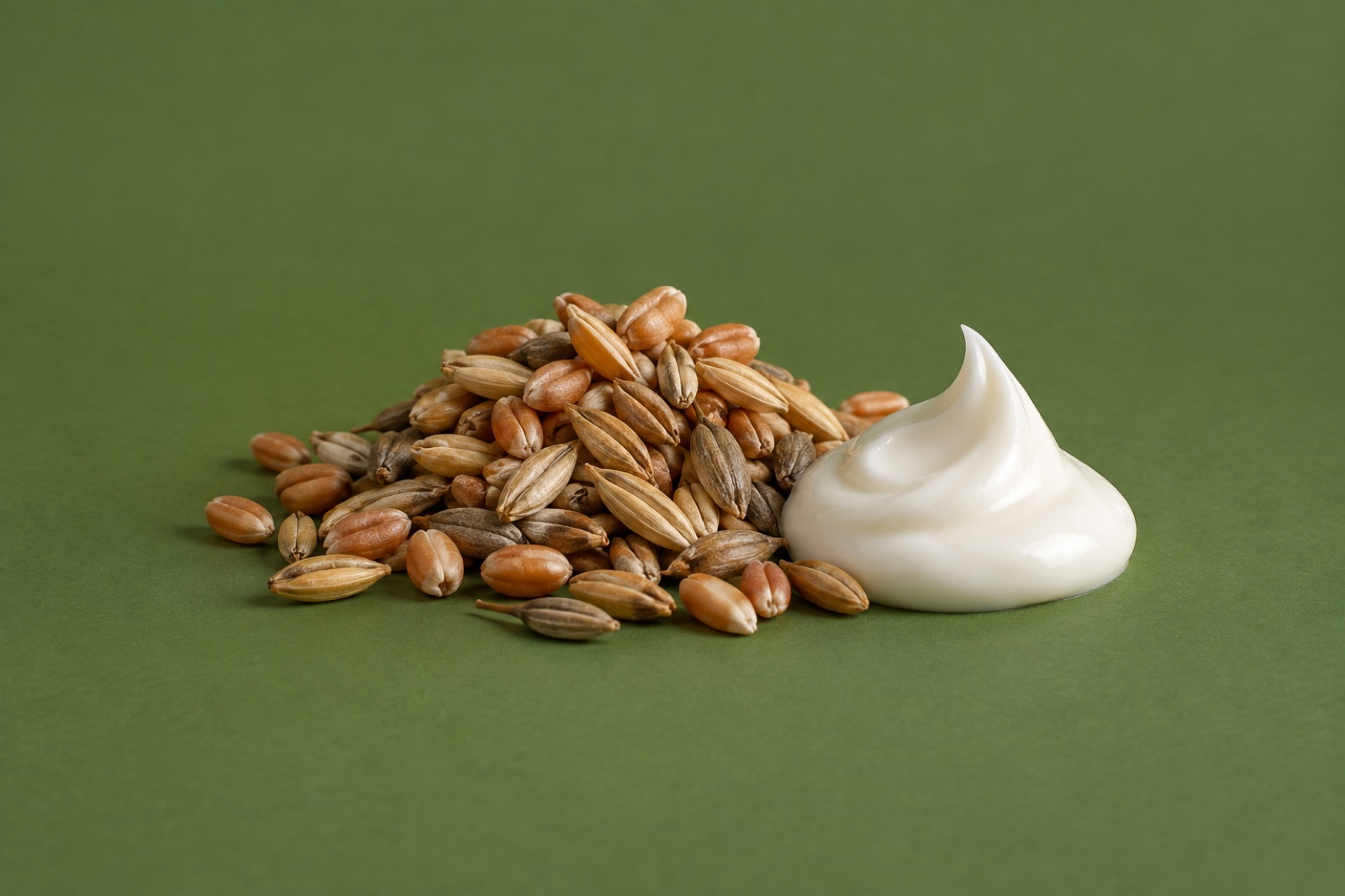
Azelaic acid is a dicarboxylic acid found naturally in grains. The MFDS ingredient information lists its molecular formula as C9H16O4 and its CAS number as 123-99-9.
In Korean it goes by several transliterated names, but they all mean azelaic acid. Even if the name looks different on an ingredient list or a prescription leaflet, it’s the same ingredient, so stick to one name in your log.
What does azelaic acid 20% mean?
The Korean Dermatological Association explains that azelaic acid is used for acne in dermatology care as a 20% cream and tends to have fewer side effects than topical retinoids. A 2023 systematic review of 43 randomized trials on acne, rosacea and melasma (20 on rosacea, 16 on acne, 7 on melasma) also mostly covered the 20% strength.
There are studies of a 15% gel too. In a 2024 randomized trial following 40 adult women aged 25 to 44 for 6 months, the 15% gel was applied twice a day, and 15% of the gel group dropped out. Abroad, there’s also a 2023 Brazilian study in which 53 adult women whose acne had settled used a dermocosmetic containing azelaic acid for 16 weeks, but that’s a separate matter from Korea’s cosmetic rules.
How do you keep a sting diary in your first 4 prescribed weeks?
Every day, write one line: the time you applied it, the amount, and a sting score (0–10) five minutes later. In a 2009 study in which 102 people with rosacea using a 15% gel recorded stinging and burning scores for each side of the face for 7 days, the cumulative score dropped more on the side where a moisturizer was added.
That result comes from adding a moisturizer to a prescription gel, so it isn’t the effect of the moisturizer alone. Still, a “moisturizer added” column in your diary lets you show right away at your appointment which days stung less. In a 2004 study of 40 women with mild to moderate rosacea, 62.5% had a burning reaction to a lactic acid sting test, but no signs of barrier damage were found on water loss (TEWL) and stratum corneum hydration (corneometry) tests after 2 weeks on a 15% gel. Don’t decide to stop just because it stings; look at whether the score is going down or up.
How do you split days with salicylic acid or retinol products?
Don’t decide the split on your own; ask on the day you get the prescription and write down the answer. The 2024 American Academy of Dermatology guideline makes combining topical products with different mechanisms a good practice statement, but which combination to use and when is a decision for your doctor.
Three questions are enough in the exam room: whether to pause the salicylic acid toner or retinol serum you’ve been using for the first few weeks; if you bring them back, whether on the same day or different days; and above what sting score you should call. Copy the answers into the “days as instructed” column in the table below, and you won’t get confused even in weeks when your routine is thrown off, like exam weeks for students or shift work.
First 4-week sting diary
| Week | Log daily | Days as instructed (example) | Also note | Show at the next visit |
|---|---|---|---|---|
| Prescription day | Strength, times per day, amount | Keep or pause current salicylic acid and retinol products | List of products you use now | — |
| Week 1 | Time applied, sting 0–10 after 5 minutes | Days with azelaic acid only | Whether you added moisturizer | Day and area with the highest score |
| Week 2 | Sting score, areas that turned red | (Fill in as instructed) | Days around your period, late work nights, sunny days | Whether it dropped from week 1 |
| Weeks 3–4 | Sting score, number of new bumps | Days you brought back your usual products | Names of products brought back | Score difference between days with and without them |
Scoring at the same time every day matters. If you mix morning and night scores, day-to-day comparisons get blurry.
When should you call the clinic or see a dermatologist?
- If your sting score doesn’t drop or goes up after 1 to 2 weeks, or you get swelling or blisters, stop using it and contact the clinic that prescribed it.
- If you’re pregnant or planning a pregnancy, talk to a dermatologist before it’s prescribed.
- If deep bumps that hurt when pressed or breakouts that leave scars increase, move your next appointment up.
- If you’ve already been using a product bought from overseas and the redness won’t settle, stop the product and see a dermatologist.
Evidence behind this guide
- The MFDS drug safety portal (reference date 2021-08-24) classifies “1,7-heptanedicarboxylic acid (azelaic acid), its salts and derivatives” as an ingredient banned from cosmetics in Korea.
- A 2023 systematic review of 43 randomized trials (PMID 37550898) looked at 20 trials on rosacea, 16 on acne and 7 on melasma, mostly using the 20% strength for at least 6 weeks.
- In a 2009 study of 102 people with rosacea (PMID 19746764), the cumulative stinging and burning score over 7 days dropped more on the side of the face where a moisturizer was added to the 15% gel.
Frequently asked questions
Why is azelaic acid banned in Korea?
The restricted cosmetic ingredient information on Korea's Ministry of Food and Drug Safety (MFDS) drug safety portal lists "1,7-heptanedicarboxylic acid (azelaic acid), its salts and derivatives" as an ingredient banned from cosmetics in Korea (reference date 2021-08-24). The list doesn't give a reason. In Korea, it's accurate to think of it as an ingredient used in dermatology care and to ask a doctor about a prescription if you need it.
What is azelaic acid 20%?
The Korean Dermatological Association explains that azelaic acid is used for acne in dermatology care as a 20% cream. A 2023 systematic review of 43 randomized trials also mostly covered the 20% form. Follow the strength and frequency given by the clinic that prescribed it.
What is azelaic acid made of?
Azelaic acid is a dicarboxylic acid found naturally in grains (molecular formula C9H16O4). In Korea, it goes by several transliterated names, but they all refer to the same ingredient, azelaic acid.
Sources
- Korea's Ministry of Food and Drug Safety drug safety portal — Restricted cosmetic ingredients: 1,7-heptanedicarboxylic acid (azelaic acid), its salts and derivatives (reference date 2021-08-24) (Korean)Institutional
- Korean Dermatological Association — Acne vulgaris (Korean)Institutional
- Azelaic acid for acne, rosacea and melasma: systematic review, 2023 (PMID 37550898)A
- American Academy of Dermatology guidelines of care for the management of acne, 2024 (PMID 38300170)A
- Quality of life with azelaic acid 15% gel vs. an oral medicine in adult female acne, 2024 (PMID 39444646)A
- Myrtle extract and azelaic acid dermocosmetic in the maintenance phase of adult female acne, 2023 (PMID 36729399)A
- Adding a moisturizer during azelaic acid 15% gel use and symptom scores, 2009 (PMID 19746764)B
- Azelaic acid 15% gel use and sensory irritation in 40 women with rosacea, 2004 (PMID 15551720)B
Videos and forum posts never count as evidence for a fact here. Full rules: Editorial policy